

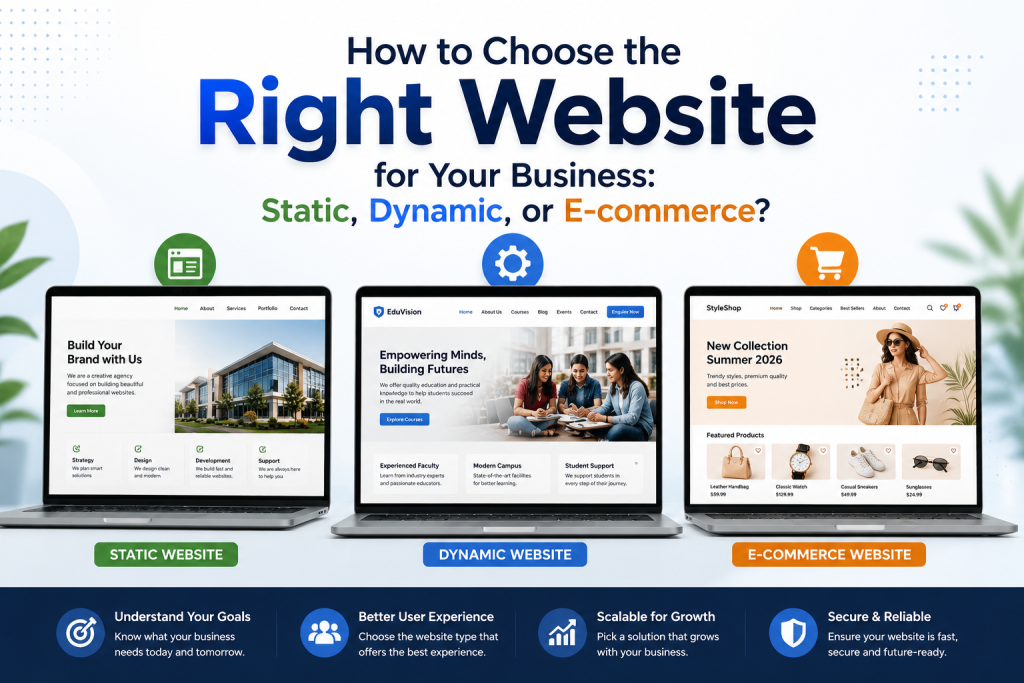
In 2026, having a website is no longer just about “being online.” Your website is often the first place a potential customer goes when they hear about your business.
They may find you through Google, Instagram, Facebook, a referral, or even a WhatsApp message. Before making a decision, many people will still search for your business online and look at your website.
But here’s something many business owners don’t realize:
Not every business needs the same kind of website.
A local café, a real estate company, a resort, and an online clothing store have completely different needs. Choosing the right type of website can save you money, make your business easier to manage, and give your customers a much better experience.
1. What Is a Static Website?
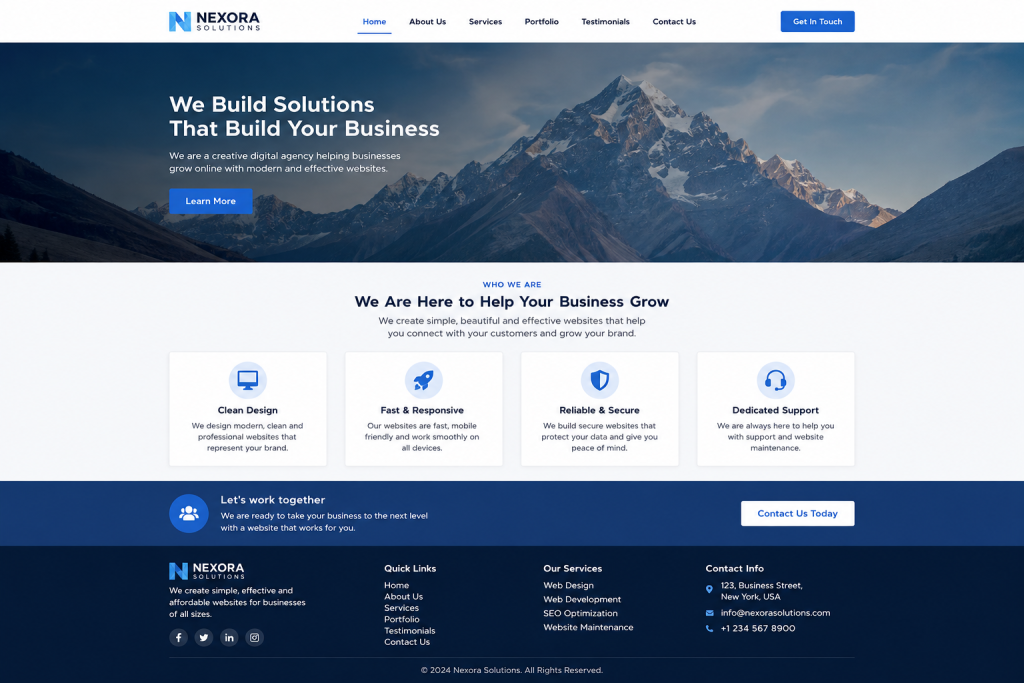
A static website is one of the simplest types of business websites.
The content is generally fixed, meaning visitors see information such as your company introduction, services, portfolio, contact details, location, and other important information.
For example, imagine you own a small salon. You may simply want customers to know:
- Who you are
- What services you provide
- Your pricing
- Where you’re located
- How to contact you
- How to book an appointment
You don’t necessarily need a complicated website with dozens of features.
A clean, professional static website may be all you need.
Who should consider a static website?
Static websites can work particularly well for:
- Small businesses
- Freelancers
- Consultants
- Personal portfolios
- Local service providers
- Small agencies
- Startups
- Restaurants and cafés with simple requirements
The biggest advantage is simplicity. They can be relatively affordable, fast, and straightforward to maintain.
However, if your business needs frequent content updates, customer accounts, advanced forms, bookings, or other interactive features, you may eventually need something more flexible.
2. What Is an E-commerce Website?
If you want to sell products online, you are entering a different category.
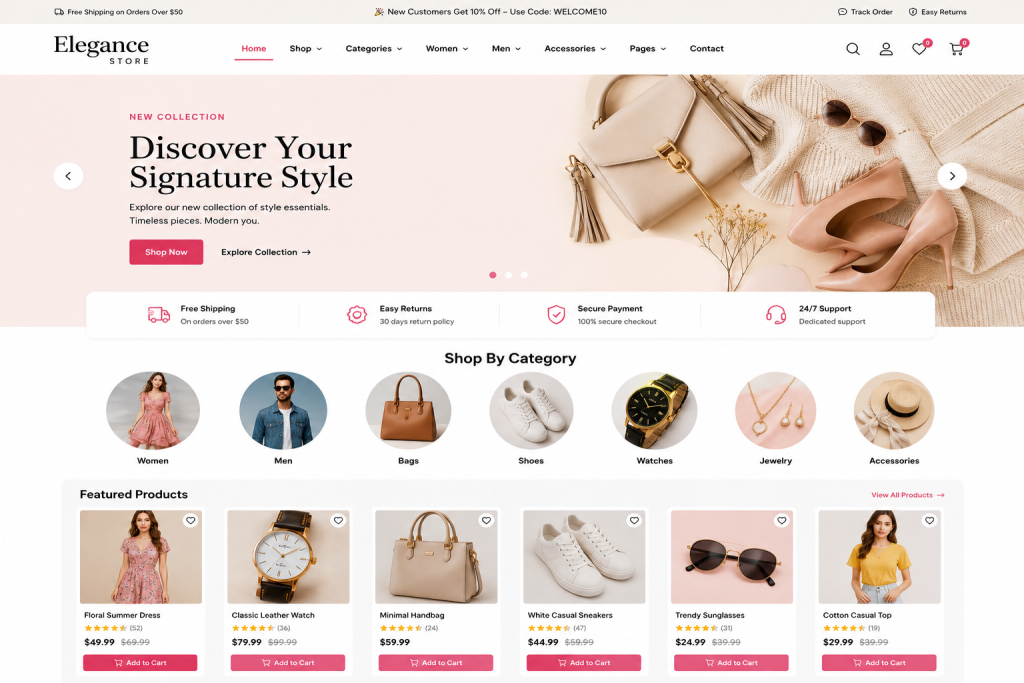
An e-commerce website is designed to allow customers to browse products and make purchases directly through your website.
Think about an online clothing store.
A customer should be able to:
- Browse products
- Select a product
- Choose size or variation
- Add it to the cart
- Enter delivery information
- Make a payment
- Receive an order confirmation
Behind the scenes, the business also needs tools to manage products, orders, customers, inventory, payments, shipping, and more.
That’s why an e-commerce website usually requires more planning than a simple business website.
Who needs an e-commerce website?
E-commerce is suitable for businesses selling products such as:
- Clothing
- Jewellery
- Cosmetics
- Electronics
- Home décor
- Food products
- Handmade products
- Digital products
- And many other categories
If your main goal is to sell products online, an e-commerce website is usually the obvious choice.
3. What Is a Dynamic Website?
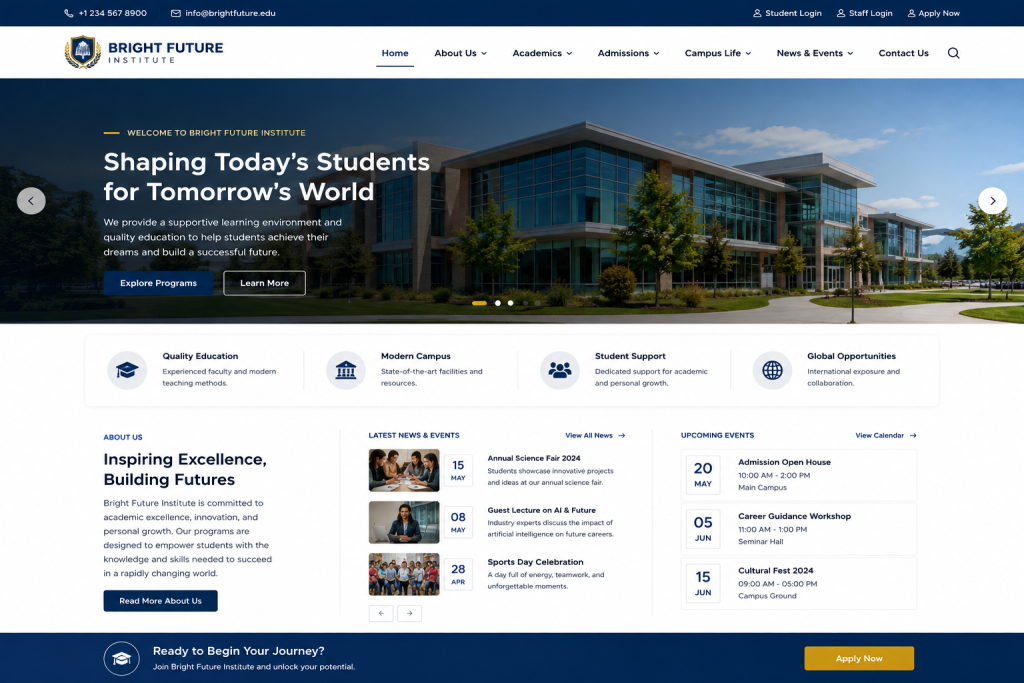
A dynamic website is more flexible and interactive.
Instead of simply displaying fixed information, it can allow you to manage and update content more easily. It can also support features that require users to interact with the website.
For example, a resort might need:
- Room information
- Booking enquiries
- Gallery
- Customer enquiry forms
- Testimonials
- Packages
- Offers
- Blog or news sections
- Location and map integration
Similarly, a school might need admission forms, announcements, events, faculty information, and downloadable resources.
A dynamic website gives a business more room to grow.
Who should consider a dynamic website?
It can be a good option for:
- Corporate businesses
- Schools and educational institutions
- Resorts and hotels
- Agencies
- Service-based companies
- Membership organizations
- Businesses with frequently changing content
If you expect your website to grow along with your business, a dynamic website can be a more practical long-term choice.
Static vs Dynamic vs E-commerce: Which One Is Right for You?
There isn’t one website type that is automatically “the best.”
The right choice depends on what your business actually needs.
| Feature | Static | Dynamic | E-commerce |
|---|---|---|---|
| Business information | ✓ | ✓ | ✓ |
| Service pages | ✓ | ✓ | ✓ |
| Regular content updates | Limited | ✓ | ✓ |
| Interactive features | Limited | ✓ | ✓ |
| Product selling | ✕ | Limited | ✓ |
| Online payments | Usually ✕ | Optional | ✓ |
| Shopping cart | ✕ | ✕ | ✓ |
| Order management | ✕ | Limited | ✓ |
| Scalability | Basic | High | High |
The important thing is not to choose a website because it sounds more advanced.
Choose it because it solves your business problem.
Don’t Choose a Website Based Only on Price
Budget is obviously important for any business.
But choosing the cheapest option isn’t always the best financial decision.
A website that doesn’t work well on mobile devices, loads slowly, is difficult to update, or doesn’t provide a good experience can end up costing you customers.
Think about your website as an investment rather than simply an expense.
A good website should help people:
Find you → Understand you → Trust you → Contact or buy from you.
If it fails somewhere along that journey, you’re potentially losing business.
Your Website Should Be Built Around Your Customers
One of the biggest mistakes businesses make is designing a website around what they want to show instead of what their customers want to know.
A customer visiting a restaurant website may immediately want to see the menu.
Someone looking for a resort may want to see rooms, photos, amenities, location, and booking information.
Someone looking for a software company may want to understand the services, experience, solutions, and contact options.
Your website should answer those questions quickly.
Good website design isn’t about adding more things. It’s about making the right things easy to find.
Don’t Forget About Mobile, Speed and SEO
Whichever type of website you choose, there are a few things you shouldn’t compromise on.
Mobile responsiveness
Your website should look and work properly on smartphones, tablets, and computers.
Website speed
People don’t like waiting for slow pages. A fast website provides a better experience and can also support your search visibility.
SEO
A beautiful website doesn’t help much if potential customers can’t find it.
Basic SEO should be considered from the beginning, including proper page structure, headings, metadata, content, URLs, and technical optimization.
Security
Especially for dynamic and e-commerce websites, security should be taken seriously.
Easy maintenance
Your website should be manageable as your business changes and grows.
Final Thoughts
Choosing between a static, dynamic, or e-commerce website doesn’t have to be complicated.
Think about what your business needs today, but also think about where you want your business to be tomorrow.
A small local business may be perfectly served by a simple, professional website. A growing company may benefit from a dynamic platform. And a business selling products online will likely need a complete e-commerce solution.
The goal isn’t to build the biggest or most complicated website.
The goal is to build the right website for your business and your customers.
At Tanunix, we help businesses plan and build websites based on their actual requirements—from professional business websites to dynamic platforms and e-commerce stores.
If you’re unsure which type of website is right for your business, start with your goals, your customers, and your future plans. The technology should come after that.