

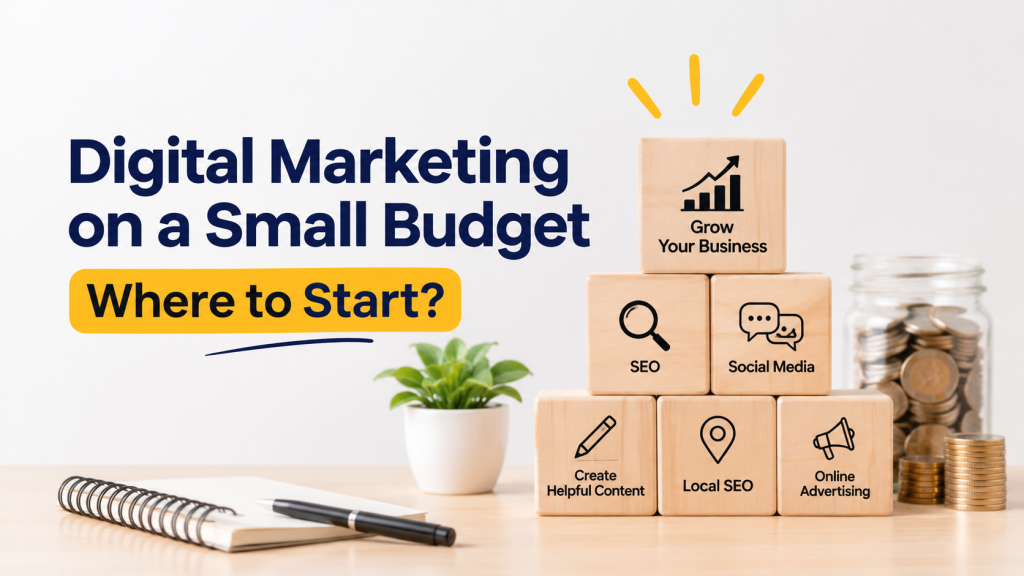
Starting a business is exciting, but promoting it can feel challenging when you have a limited budget. You may have a great product or service, but if people do not know about your business, finding customers can take time.
The good news is that digital marketing on a small budget does not have to be complicated or expensive. You do not need to be present on every social media platform, spend thousands on advertisements, or hire a large marketing team to get started.
What you really need is a clear plan, a good understanding of your customers, and the willingness to stay consistent.
In this guide, we will explore some practical ways to promote your business online, reach potential customers, and build your online presence without putting too much pressure on your budget.
1. Understand Your Target Audience First
Before spending money on marketing, take some time to understand the people you want to reach.
Think about who your customers are, what problems they face, and how your product or service can help them. Consider their location, interests, needs, and the questions they commonly ask before making a purchase.
For example, if you own a local bakery, your audience may include families, office workers, and people looking for cakes for special occasions. If you provide professional services, your ideal customers may be business owners looking for reliable solutions.
When you understand your audience, you can create more relevant content and avoid spending money trying to reach people who are unlikely to become customers.
A simple starting point: Write down three things your ideal customer needs and three questions they might ask before choosing your business.
2. Build a Professional Online Presence
When someone hears about your business, they may search for it online before contacting you. What they find can influence whether they decide to trust you.
A professional online presence helps customers understand what you offer, how you work, and how they can reach you.
Start with the basics:
- Create a clear and professional business profile on relevant platforms.
- Add accurate contact details, business hours, and service information.
- Use consistent branding, including your business name, logo, and colours.
- Create a website that explains your services and makes it easy for visitors to contact you.
You do not necessarily need a complicated website. A well-planned website with clear information, mobile-friendly pages, and a simple contact process can be a useful starting point.
Your website can also support your other marketing efforts by giving interested customers one reliable place to learn more about your business.
3. Use Social Media With a Clear Plan
Social media can help small businesses connect with potential customers without requiring a large advertising budget. However, simply creating accounts and posting occasionally may not produce meaningful results.
Instead of trying to manage every platform, choose one or two that suit your audience and business goals.
For example, Instagram may work well for boutiques, restaurants, salons, and visual brands. LinkedIn can be useful for professional services and business-to-business companies. Facebook can help local businesses connect with nearby communities.
Share content that is genuinely useful to your audience, such as:
- Answers to common customer questions.
- Tips related to your products or services.
- Behind-the-scenes glimpses of your work.
- Customer feedback, shared with permission.
- Examples of completed projects or services.
- Clear explanations of how your business helps people.
You do not need to post several times every day. Choose a manageable schedule and focus on making each post useful, relevant, and easy to understand.
Remember, social media is not just about collecting likes and followers. It is about building relationships and helping the right people discover your business.
4. Improve Your Local Visibility With SEO
If your business serves a particular city, town, or region, local SEO can help potential customers discover you when they search for relevant products or services.
For example, someone might search for a website developer in West Bengal, a restaurant nearby, or a digital marketing company in their city.
Here are a few practical ways to improve local visibility:
- Create and maintain a Google Business Profile if your business is eligible.
- Keep your business name, address, phone number, and opening hours accurate.
- Make sure your website clearly describes your services and service areas.
- Use relevant search terms naturally in your website content.
- Encourage genuine customer reviews without offering rewards for positive ratings.
- Respond professionally to customer questions and reviews.
Local SEO takes time, and results are not guaranteed overnight. However, maintaining accurate business information and publishing useful, relevant content can help customers find and understand your business.
Avoid filling your website with repeated keywords or creating pages that offer little value. Focus on answering the questions real customers are asking.
5. Create Helpful Content Instead of Only Promoting Your Business
One common marketing mistake is making every post or article about selling something.
Customers often want information before they are ready to buy. They may be comparing options, learning about a problem, or trying to understand what a service costs.
This is where content marketing can help.
You can create simple blog articles, short videos, social media posts, FAQs, or practical guides that answer common questions in your industry.
For example:
- A bakery could publish tips for choosing the right cake for an event.
- A clothing boutique could share advice on caring for different fabrics.
- A web development company could explain how to choose the right website for a business.
- A digital marketing agency could explain common mistakes businesses make when advertising online.
Helpful content gives people a reason to engage with your business even before they become customers.
It can also support SEO by answering relevant questions and creating opportunities for your website to appear in search results.
You do not need expensive equipment or a professional production team to begin. Start with what you know, explain it clearly, and publish information that genuinely helps your audience.
6. Try Paid Advertising Carefully
Organic marketing methods such as SEO and social media can help build visibility over time, but some businesses may also benefit from paid advertising.
Google Ads can help you reach people searching for particular products or services. Social media advertising can help you introduce your business to audiences based on relevant targeting options.
However, spending money on ads without a clear plan can quickly become expensive.
Before launching a campaign:
- Decide what you want to achieve, such as enquiries, calls, bookings, or sales.
- Identify the audience you want to reach.
- Set a daily or total budget you can comfortably afford to lose.
- Create a clear advertisement with a relevant message.
- Send visitors to a useful landing page or the most relevant page on your website.
- Track enquiries, conversions, and actual business results.
Start with a small, controlled test rather than committing a large amount immediately. Review the results before deciding whether to increase your spending.
Remember that clicks and impressions do not automatically translate into customers. What matters is whether your marketing contributes to your business goals.
7. Use Free and Affordable Marketing Tools
You do not need to purchase every marketing tool you see online. Several free or low-cost resources can help you manage your marketing activities more efficiently.
Depending on your needs, you can explore:
- Google Analytics: To understand how people use your website.
- Google Search Console: To monitor your website’s performance in Google Search.
- Google Business Profile: To manage your eligible business listing on Google.
- Canva: To create social media graphics and other visual content.
- Google Trends: To explore search interest in topics and keywords.
- A spreadsheet or simple planner: To schedule content and track marketing results.
Some tools offer paid plans or features, but their free options may be sufficient when you are starting out.
Choose tools based on a real need. A small business often benefits more from using a few tools consistently than from paying for several tools that are rarely used.
8. Build Trust Before Trying to Sell
People are more likely to consider a business when they understand what it offers and feel confident about dealing with it.
Trust is especially important for small businesses that are still building their reputation.
You can strengthen trust by providing clear service information, displaying genuine customer feedback with permission, explaining your process, and communicating honestly about pricing and timelines.
Keep your website updated and make sure customers can easily contact you. Respond to enquiries professionally and avoid making promises you cannot fulfil.
If you are new and do not have many reviews or testimonials yet, focus on demonstrating your knowledge, showing examples of your work, and explaining how you approach customer problems.
Building trust takes time, but it can make your marketing efforts more effective in the long run.
9. Track Your Results and Improve Gradually
One of the biggest advantages of digital marketing is that you can measure many aspects of your performance.
Instead of assuming that a particular strategy is working, look at the results and learn from them.
Depending on your goals, useful measurements may include:
- Website visits and the pages people view.
- Search impressions and clicks.
- Social media engagement and meaningful enquiries.
- Phone calls and contact form submissions.
- Advertising costs and conversions.
- Sales or qualified leads generated through marketing.
You do not need to analyse dozens of numbers every day. Start with two or three measurements that relate directly to your business goals.
For example, if your goal is to receive more enquiries through your website, track contact form submissions and calls rather than focusing only on website traffic.
Review your results regularly. Continue activities that are producing useful outcomes, improve those that show potential, and reconsider spending that is not delivering meaningful value.
10. Create a Simple Marketing Plan for Your First Month
If you are unsure where to begin, keep your first month manageable. You can build a stronger marketing routine without trying to do everything at once.
Week 1: Establish the basics
- Define your target audience.
- Review your website and business profiles.
- Check that your contact details and service information are accurate.
Week 2: Start creating content
- Prepare a few helpful social media posts.
- Write down common customer questions.
- Plan one useful blog article or guide.
Week 3: Improve visibility
- Review your website’s basic SEO.
- Update your eligible Google Business Profile.
- Share useful content consistently on your chosen platforms.
Week 4: Review and learn
- Check website traffic and customer enquiries.
- Identify which content attracted useful attention.
- Decide what to improve in the following month.
This is a starting framework, not a guarantee of results. Your progress will depend on your industry, audience, competition, and consistency.
The goal is to develop a marketing process you can maintain, learn from, and improve over time.
Final Thoughts
Digital marketing does not have to begin with a big investment. For a small business, the most sensible first step is often to understand its customers, establish a trustworthy online presence, and focus on a few marketing activities that support clear business goals.
You can begin with a professional website, helpful content, relevant social media activity, and basic SEO. As you understand what works for your audience, you can gradually explore paid advertising and other opportunities.
The important thing is not to do everything at once. It is to make thoughtful decisions, remain consistent, and improve based on what you learn.
At Tanunix, we help businesses and startups strengthen their online presence through website development, SEO, and digital marketing solutions. If you are planning to grow your business online, the right strategy can help you take the next step with greater confidence.
Start small, focus on your customers, and build from there.