

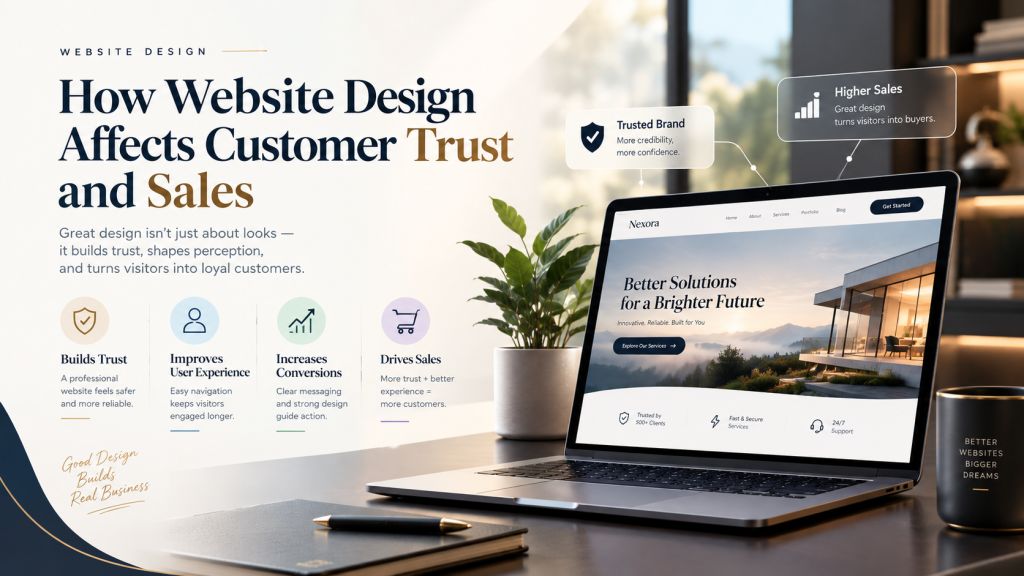
When someone visits a website for the first time, they usually make an impression within a few seconds.
Before reading every word or checking every service, they notice how the website looks, how quickly it loads, whether it works properly on their phone, and how easy it is to find what they need.
That first impression can make a big difference.
A well-designed website can make a business feel professional, reliable, and trustworthy. On the other hand, a confusing, outdated, or poorly designed website can make visitors hesitate—even if the business itself provides excellent products or services.
This is why website design is not just about making a website look attractive. It can directly influence how customers feel about a business and whether they decide to contact, purchase from, or work with it.
1. First Impressions Matter
Think about visiting a physical store.
If the store looks clean, organized, and professional, you may feel comfortable exploring it. But if everything looks neglected or confusing, you might leave without giving the store much of a chance.
A website works in a similar way.
A clean layout, balanced design, readable text, and professional visuals can immediately create a positive impression. Visitors are more likely to believe that a business takes its work seriously when its website looks well maintained.
This doesn’t mean a website needs to be complicated or filled with animations. In many cases, a simple and well-organized design creates a much stronger impression.
2. Professional Design Builds Trust
Customers naturally want to know whether they can trust a business before spending their money or sharing their information.
Your website can help answer that question.
Consistent branding, professional images, clear information, and a thoughtful layout can make a business appear more established and dependable.
Small details matter too. Things such as a proper logo, consistent colors, readable fonts, working buttons, and accurate contact information can make the overall experience feel more reliable.
A professional-looking website doesn’t automatically mean a business is trustworthy, but a poor website can certainly make customers question it.
3. Mobile-Friendly Design Is No Longer Optional
A large number of people browse websites from smartphones.
Imagine finding a business through Google, opening its website on your phone, and discovering that the text is too small, the buttons are difficult to tap, or the pages don’t fit properly on the screen.
Most people won’t spend much time trying to figure it out. They’ll simply move on.
A responsive website adjusts to different screen sizes and makes the experience comfortable on smartphones, tablets, and computers.
If you want customers to stay on your website, the mobile experience deserves as much attention as the desktop version.
4. Website Speed Can Influence Customer Decisions
Nobody enjoys waiting for a website to load.
When a page takes too long to open, visitors can become frustrated and leave before they even see what the business offers.
Website speed is therefore more than a technical issue. It is part of the customer experience.
Optimized images, clean code, efficient hosting, and proper website development can all contribute to better performance.
A faster website makes it easier for visitors to explore your services, products, and information without unnecessary waiting.
5. Easy Navigation Helps Visitors Find What They Need
A website can contain excellent information and still lose customers if that information is difficult to find.
Visitors should be able to understand the basic structure of a website without having to search through several unrelated pages.
Important sections such as:
- Home
- About
- Services
- Products
- Portfolio
- Contact
should be easy to find.
Good navigation reduces frustration and helps visitors move naturally from learning about a business to taking the next step.
6. Clear Content Makes Customers Feel More Confident
Good design isn’t only about visuals.
The words on your website matter just as much.
Visitors should quickly understand:
- What your business does
- What products or services you offer
- Who you serve
- What makes your business different
- How they can contact you
Avoid filling every page with complicated language just to make the business sound professional.
Simple, honest, and useful information is often much more effective.
When customers understand what you offer, they have fewer reasons to hesitate.
7. Reviews and Testimonials Can Reduce Doubt
Even when people like what they see on a website, they may still wonder:
“Can I trust this business?”
Real customer reviews and testimonials can help answer that question.
Displaying genuine feedback from previous customers can give potential customers an idea of what it is actually like to work with the business.
Other trust-building elements can include:
- Client logos, where permitted
- Case studies
- Portfolio projects
- Business address
- Contact details
- Relevant certifications or credentials
These details can help visitors feel that they are dealing with a real and established business.
8. Clear Calls-to-Action Can Increase Enquiries
Sometimes a customer is interested but doesn’t know what to do next.
This is where a clear call-to-action helps.
Instead of leaving visitors wondering how to contact you, guide them with simple options such as:
Get a Quote
Contact Us
Book a Consultation
Call Now
WhatsApp Us
Buy Now
The right call-to-action depends on the business.
A service company may want more enquiries, while an online store may want customers to purchase a product.
The goal is simple: make the next step obvious.
9. Good Design Supports Sales, But It Can’t Do Everything
A beautiful website doesn’t automatically guarantee more sales.
Sales also depend on factors such as product or service quality, pricing, customer service, marketing, offers, reputation, and the overall customer experience.
However, good website design can remove unnecessary barriers.
For example, if your website loads quickly, explains your service clearly, looks trustworthy, works well on mobile devices, and makes contacting you easy, customers have fewer reasons to leave.
In that sense, good design supports the entire sales process.
10. Common Website Design Mistakes Can Drive Customers Away
Sometimes small design problems can have a surprisingly large effect.
Some common mistakes include:
- Too much information on one page
- Difficult navigation
- Outdated design
- Poor-quality images
- Slow loading pages
- Websites that don’t work properly on mobile
- Hard-to-find contact information
- Too many pop-ups
- Unclear calls-to-action
- Inconsistent branding
The good news is that most of these problems can be identified and improved.
A Professional Website Should Work for Your Business
Your website is often more than an online brochure.
For many customers, it is the first place where they learn about your business, compare your services, look at your work, and decide whether to contact you.
That’s why effective website design should focus on more than appearance.
It should create a good first impression, build confidence, make information easy to find, provide a smooth experience, and guide visitors toward taking action.
At Tanunix, we believe a business website should be designed around the business and its customers—not just around a collection of attractive visuals. From website design and development to responsive layouts, UI/UX, performance optimization, and SEO-friendly structures, every part should have a purpose.
Because ultimately, a successful website isn’t simply one that looks good.
It’s one that makes people feel confident enough to take the next step.